8/01/2005

McPherson is phoning it in

As the idiom has it, James McPherson is "phoning it in." He has been "phoning it in" for a long time, blandly recapitulating the strained synthesis and sweeping generalities found in Battle Cry of Freedom.

Tonight, however, he will literally be phoning it in.

He will speak to a Troy/Albany Civil War Roundtable by telephone.

Can you imagine listening to Civil War history cliches couched in the least challenging terms issuing in halted, "thoughtful" delivery through a cheap speaker for about an hour? While you sit in an hard chair counting "ums" and "ahs"?

The organizers can and do and are thrilled beyond words.

"Professor McPherson will open our conference call by discussing the question, 'Was Slavery the Cause of the Civil War?'" said Dr. Milton McPherson of Troy. "Of all the people in the world, Professor McPherson knows more about the African American experiences during the Civil War and Reconstruction than anybody. What he will present is first-class stuff. What he knows is mind-boggling."
His effect on fans is mind-boggling.

Genealogy, the next phase

Nice story here about a genealogist who is having suspected relatives disinterred just to be sure they are kin.
NEWS | Rededication ceremony of Civil War plaque * Church spire houses Civil War relic * Smithsonian to examine Kinston caskets

7/29/2005

My generals, your generals

Ever wonder why Civil War readers become emotionally invested in generals (the "characters" in ACW nonfiction narratives)?

Belongingness theory says readers might have entered parasocial relationships with these renowned figures.

Porter's battlefield gets a stay of execution

The latest on Shepherdstown:
Any action on remaining unresolved issues surrounding a controversial plan to build more than 100 houses on 121 acres that some people contend are part of a Civil War battlefield will have to wait until Aug. 9, officials said Tuesday. [...]
According to records on the National Park Service's Web site, the Battle of Shepherdstown took place Sept. 19 and 20, 1862, on acreage to the west side of what is now Trough Road, including Far Away Farm [the proposed building site], which is east of Shepherdstown.
What, a battle after Antietam? You must be mistaken, everyone knows McClellan failed to act:
After the Battle of Antietam, Gen. Robert E. Lee began to pull his Army of Northern Virginia back across the Potomac River, crossing at Pack Horse Ford. Union soldiers arrived on the Maryland side of the river the following morning and began to shoot at southern troops across the water. [Emphasis added.]
Oh, I see. These preservation nuts are confusing potshots with an actual battle.

Send in the bulldozers; I've read my Centennial histories.
NEWS | Civil War reenactors don uniforms to oppose Battlefield Bypass * Civil War, Battle of Homestead vet finally gets his story told * Civil War musical returns to Gettysburg

7/28/2005

Antietam Jamboree

For some reason, President Bush cancelling his trip to the Jamboree reminded me of Lincoln cancelling his review at Antietam.

Especially given the casualties ennumerated in this story. (And in this one here.)

The Civil War's "Patrick O'Brien"

Here's a nice little profile of James Nelson, referred to in our search for the ACW's Patrick O'Brien equivalent. Talk about doing your research:
James Nelson was with the Golden Hinde for a year, sailing from Los Angeles through the Panama Canal to Texas, eventually leaving in Houston. After selling his boat and nearly all his possessions he moved to Washington State, where he went to work aboard the Lady Washington, a replica of an 18th Century brig, as a rigger and deckhand. After the Washington, beset with financial troubles, laid everyone off, Nelson joined "H.M.S." Rose, a replica of a Revolutionary War British frigate.

Another one of those bureaucracy stories

Did you know?

If the Museum and White House of the Confederacy in downtown Richmond is physically moved (relocated) a few blocks "it would lose its designation as a National Historic Landmark."

Now you know!
NEWS ACW cannon is man's lawn ornament * Cast iron cannon stolen in Georgia * Panel ponders future of Museum and White House of the Confederacy * Father and son find Iowa GAR markers * Memphis grapples with Rebel names

7/27/2005

Truth in Civil War history

I had promised to start this thread today but it will have to wait, sorry to say. Meanwhile, have a look at this 1913 speech, "Truth in History."
The crying need in the study of history to-day is humility.

Yes. Still.

... remember, in short, that for very, very much history there is more importance in the ancient error than in the new-found truth.

That will be our starting point.

Judge rules against Porter's battlefield

One of the clarifying moments in Civil War history occurs after Antietam when Lee's artillery chief tells him that the pursuing McClellan has captured all of the ANV's reserve artillery:
"All?" Lee said, starting bolt upright.
"Yes, General, I fear all."
"McClellan's pursuit of Lee after Antietam," does not compute for the reader of Centennial histories; the drama of potentially losing all your army's reserve artillery to a general famous for not pursuing makes even less sense. The better reader takes the clue, tosses the Centennials and heads for the stacks.

Other readers merely cope with the dissonance. Which may be why this article about Shepherdstown uses the wording "acres that some people contend are part of a Civil War battlefield."

That could refer to the siting of those acres or it could refer to the crazy idea that there was a Battle of Shepherdstown after Antietam.

In any case, this new battle has been lost by the preservationists. The judge has greenlighted housing.

Bad history can have bad consequences.

One of those government agency stories

This is a classic tale of its type.

A man named Gene Platt, acting on his own,
spent 3 1/2 years crawling around the tree-lined [Santa Ana, CA] graveyard, refurbishing about 180 Civil War veterans' headstones. Leaning on a sheepskin-covered footstool, he scraped off fungus and lichen, then brushed several layers of white-pigmented sealer onto the Georgia marble. With drills and grinding tools, he enhanced worn lettering, which he then painted gold.

After finishing, he said a prayer over each grave. Operating with permission from cemetery officials, he invested thousands of hours and dollars in the project, hoping his example would be copied nationwide.

The federal government disapproves and is sending in troops of boyscouts to undo his work, to strip markers "back to their earlier state," this story reports.
NEWS | Cornell student transcribes Pennsy veterans ACW letters * DSU student transcribes Vermont soldier's letters * New ACW museum opens in KY

7/26/2005

The Diary of a Public Man revisited

I recently revisited "The Diary of a Public Man: Unpublished Passages of the Secret History of the American Civil War"

It seems to be the journal of a Buchanan official during the transition to Republican administration; the author met Lincoln and was regarded as a friend of William Seward's.

I was impressed with how close the tone of this is to the diaries of Welles and Chase - that the atmosphere captured here was not a temporary jostling of loose ends during incomings and outgoings but that we were dealing with a real taste of McClellan's "sink of iniquity."

I am occasionally cautioned (usually by Centennial readers) not to put my trust in diaries or newspapers. I trust them absolutely - to convey to me the "noise" and atmosphere in which decisions were made. In reading the material below, imagine yourself a general trying to formulate policy, plans or directions, or a Cabinet officer drafting goals. Here are some highlights from the articles that appeared in North American Review:
* Stephen Douglas tells the author that Abner Doubleday is Ben Wade's creature and that Doubleday (and Wade) incited Major Anderson's evacuation of Fort Moultrie in favor of Sumter. [Remember that Doubleday writes Lincoln questioning Anderson's loyalty later during the Sumter crisis.]

* Douglas explains that "Wade and that gang are infuriated with Seward's coming into the Cabinet, and their object is to make it impossible for Lincoln to bring him in." The move from Moultrie to Sumter – and its ratcheting up of Charleston's outrage – is seen as sabotaging moderation, hence Seward's usefulness.

* Douglas holds Buchanan to be duplicitous and cowardly: "He likes to have the people deceived in him – he enjoys treachery, sir, enjoys it as other men enjoy a good cigar…"

* Thurlow Weed, Seward's Richelieu, comments on a New York politician, "Do I know him personally? I should rather think I do. I invented him!"

* Weed says of abolitionist Horace Greeley that he was a Northern secessionist who thought he could be elected president of a rump republic.

* Winfield Scott tells Lincoln, before the inauguration, that Italian assassins were after him.

* Douglas tells the author that Scott runs Seward and Scott himself is run by the Blairs, who were "moving heaven and earth to get control of Mr. Lincoln's Administration."

* Douglas says the Blairs are cooperating with the Radicals in Washington and New York, to remove Seward from consideration.

* Douglas says Lincoln "is eminently a man of the atmosphere which surrounds him."

* The author runs into Stanton on the street after Lincoln's arrival: "It is impossible to be more bitter or malignant than he [Stanton] is; every word was a suppressed and a very ill-suppressed sneer…" Stanton slimes Lincoln.

* The author thinks Lincoln "more tightly" held by Chase than by Seward.

* He writes on 2/28/61, "Half an hour with Mr. Lincoln today, which confirms all my worst fears. I should say he is at his wit's end."

* The Radicals already constitute a "rule or ruin" faction before the administration is formed.

* Sumner calls Cameron a "political Judas" before he is appointed. He has an obtuse interview with the author, trying to get him to talk with Lincoln against Cameron. Sumner warns that the combination of Seward and Cameron might produce a negotiated settlement instead of a complete separation from the South.

* The author is "mortified" by the heavy-handed security surrounding Lincoln's inauguration. He says the country has become a Latin American republic. He says Douglas held Lincoln's hat.

* He repeatedly returns to the Radicals' formula that labels the US Constitution "a covenant with death and an agreement with Hell." (Isaiah 28:18, "And your covenant with death shall be annulled, and your agreement with hell shall not stand when the overflowing scourge shall pass through.")
That was Washington in early 1861, certainly Washington as I have come to know it in my McClellan researches. I recognize that this account bears no relation to our noiseless, clean and tidy Civil War histories, where rational actors make optimal decisions based on straightforward information and due consideration; where a wise president holds all decisions in his hands; where modern Civil Service norms somehow thrive in the throes of political chaos; that's not my Civil War and I would like to see it retired.

I will expand on this tomorrow, marrying this post to the McClellan at Gettysburg motif in a piece about the damage we do to historic truth in Civil War history.

Meanwhile, the Public Man offers some strong medicine - drink it, please.
NEWS | Stolen ACW cannon recovered * Fort Delaware mounts ghost tours * New Orleans cemeteries ravaged by filmmakers

7/25/2005

The phantom professor strikes again

Today's Phantom Professor features a verbatim letter from a "strait A student." Take a laugh break. Student to professor:
I am not trying to put anyone down here, but you know, for your intelligence level (not just my opinion!!!) it seems like you're trying to sound smarter than you really are. ... frankly straight forward questions make the professor sound a lot more intelligent than the one with twised questions.
Wonder if Prof. McPherson got email like that.

English interest rises in Civil War - their own

England is traveling the re-enactor trail as interest in the 17th Century civil war grows. Some points of interest:

* Pipers need to know how to play laments.
* Worcester is the "Gettysburg equivalent" but without the tourism.
* It's important to re-enact the hanging of traitors after re-enacting the battle itself.
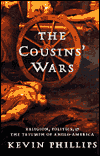
Kevin Phillips, you may recall, went to a great deal of trouble to show the connection between the English and American civil wars in his Cousins' Wars (right).

Shelby Foote joins the Greek gods

The Foote remembrances are becoming overwrought:
On the southern slope of Mount Parnassus, in an olive grove surrounding a gurgling spring, they gathered. Clad in snowy white raiment with laurel wreaths on their heads, they looked as they had in their prime. Though they fairly glowed with well-being, their visages retained those lines of sadness and experience that had made them who they were.

Yes, friends, Shelby Foote has ascended. Hand him his lyre.

You have to believe, after reading this, that newspaper readers are a patient, forgiving lot.

A big-hearted act of preservation

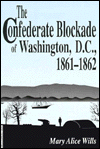
The Cockpit Point Battery's positions still exist right where rebels dug them in a comic opera attempt to "blockade Washington."

Johnston's Army of the Potomac manned artillery pieces with infantry militia, took the occasional potshot at some passing steamer, and generally succeeded in irritating Washington Radicals. According to this story:
Richard and Barbara Tiplady bought 16 acres of woods along the Potomac River in Dumfries in 1987 because it reminded them of Flirtation Walk, a pedestrian path for cadets at West Point where they had gone on their first few dates.
They paid $30,000 for it. They discovered it held the battery's old positions.
After negotiations and assurances that the fort would be preserved, the Tipladys sold the historical land in September for about $1.2 million to Vienna-based developer KSI Services
Forty times the original price ... goodbye Flirtation Walk.
"When you develop in a community, you look for things you can do," said Edward S. Byrne, senior vice president at KSI, which is building Harbor Station -- a luxury hotel and conference center with a Jack Nicklaus-designed golf course -- at the site. "It's usually giving money for schools or transportation. When we looked around, people said, 'You know, there's this property with historical significance.' "
So there's going to be this Civil War artillery position preserved among the fairways and sandtraps.

I don't think preservationists have an answer to this; we even see Civil War Preservation Trust actively courting developers to buy and build on Civil War sites, setting aside some remnant for historical use.

It's coming. "Harbor Station - harboring all your Civil War history needs."