9/30/2005

Pohanka's bequest

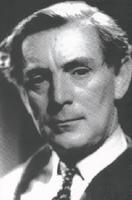
Mike Koepke has noticed something interesting about the settlement of the Brian Pohanka (right) estate.

You'll recall that Brian's widow Cricket asked mourners to make donations in Brian's name to the Civil War Preservation Trust in lieu of sending flowers. CWPT, is of course, the 800-pound gorilla among preservation groups and I have dealt harshly with them in these pages for quite some time.

It has been a very long quiet spell for CWPT: they partnered with National Geographic and Spotsylvania County earlier this year and then faded from the news, even as their membership skyrocketed from 50,000 to 70,000.

Now comes the news that Brian left $500,000 to his own Central Virginia Battlefields Trust ("Virtually every dollar you send CVBT goes towards purchasing and protecting America's heritage") and another $500,000 to the Richmond Battlefields Association ("The RBA board of directors are all volunteers and your donation will be devoted to buying the land that soldiers fought and died on").

The ethos of each organization decries paid staff and overhead. Neither expends funds for sites in Liverpool or Cherbourg.

CWPT got flower money. Brian seems to have made a statement.

(Update 3/14/06 - A bequest has come through - there was no statement.)

(Previous Pohanka posts
here and here.)

Grant books: Eureka! I have it

Doris Kearns Goodwin is casting about for a new project and may have settled on doing a Grant bio, according to the Atlantic. (Scroll down after clicking link.)

"What can this mean?" you ask. "The Grant market is glutted."

Think - who is her publisher? Simon & Schuster. Think - who is her editor? Grant author Michael Korda ... an executive who sponsored the publication of Jean Smith's failed book Grant before embarking on his own USG bio.

Simon & Schuster seems committed to the idea that Grant, the subject, is a million-selling blockbuster nonfiction project. They are struggling with the execution and have decided it's a matter of who not what. And so they will try again.

So it seems to me.

Civil War fitness

My recent Buskirk-based poke at the Army mocked the service's current physical standards with reference to this distinguished ACW combat veteran. I asked rhetorically, "How many sit-ups could he [Van Buskirk] do in a minute?" To which Chris Cross replied, rhetorically, at 6'8" and 380 pounds, as many as he felt like.

Chris posts that he is soon starting some kind of experimental Army officer training course - which reminds me of PT and MG David Grange (the elder, not the younger son who sometimes comments on news shows).

I was on the general staff of the Second Infantry Division in Korea winding down my active duty when Grange arrived to take over from his predecessor, a Machiavellian micromanager. That gentleman, on his way back to the Pentagon whence he came, a trend surfer par excellence, and had just promulgated the latest wisdom on running gear. I forget if it was the no running in sneakers rule or the no running in boots rule, as these might alternate according to the phase of the moon. They would be further modified by variations involving no running on hard surfaces and always run on hard surfaces. A further twist was provided by always take your salt tablets when exercising and avoid salt and drink lots of water when exercising.

Grange had parachuted into Normandy, arrived near Pyongyang as a replacement company commander during the UN retreat from the Yalu, and he had done seven consecutive tours with the infantry in Vietnam. Seven combat tours. He knew something about boots and hard surfaces and sweat. He was, in short, a creature of the pre-MacNamara army, the likes of which we will never see again. (MacNamara instituted rules to prevent another David Grange - or a Buskirk - from happening again.)

One project Grange had me do was to develop a walking tour of his Korean battlefield experiences - this was for VIPs and UN command colleagues - it also served a training purpose for TEWTS. We spent time flying his helicopter here and there and I got to drink up some excellent war stories. The stories told were never Grange-centered, they were entirely centered on an event pointing to some remarkable lesson.

Grange was probably about 6'5" though well under Buskirk's 380 pounds. He had a calm self-assurance, relaxed manner and good humor that I like to think came from being at the apex of combat veteranhood rather than from his Stewart Granger looks and his Philadelphia society background. He had a combat veteran's obsession: applying what he learned in his commands.

Grange felt that Army physical training was misdirected. He couldn't change the regulations but he could make men march. And march they did, at least once per month with their units and then again with the entire division en masse, with rifles and 50 pound backpacks, every soldier in his command walking 25 miles of mountain roads together, no exceptions for anyone, not cooks, not drivers, not one-star deputies.

Grange told me more than once that the thing that "got him" in the Korean War was that the army simply could not march, and it was a war where everything hinged on marching well. He used to tell his command bluntly that long-distance running develops nothing that an infantry soldier needs physically for combat.

Now, today's infantryman is laughing at my reference to 50-lb packs, being burdened with body armor and tons of other nonsense. I say to such, you have been saddled with that crap because your high command has abandoned any scenario in which you move 25 miles at a time using your legs only. You are taxicab infantry.

I hope Cross's experimental training does not have a "How much more can they carry?" component. I hope that those exercise fads du jour are history. When the brass can put on their own gear and march like David C. Van Buskirk - battlefield distances, campaign distances, in summer heat, in wool clothing, across Tennessee and Maryland hills, we'll be approaching a sane limit of mandated fitness and endurance.

Maybe some re-enactors can show the Army how.

Horace Porter

"Be moderate in everything, including moderation," Horace Porter once wrote.

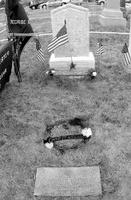
Recently his fellow New Yorkers commissioned a mere footstone for his gravesite, then turned out a paltry 30 strong for the commemoration ceremony.

That is wildly excessive moderation considering the number of people who likely attended various nearby Manhattan book parties for the many Grant tomes released in the last 18 months. Porter himself organized the creation of tombs for his old boss Grant and for John Paul Jones.

Hats off to the locals for conceiving and organizing this. It's a an example and a start that needs to scale upwards, at least moderately.
NEWS | Georgia sets aside funds to stop development of battlefield * Author taps Civil War ancestry to write about N.Y. regiment * Quantrill unit uniform to be auctioned Monday

9/29/2005

Prime cut of Foote

From Shelby Foote at his peak (1950, Follow Me Down). Just for the hell of it:
Granddaddy's other sleeve flapped loose. It had been that way since Shiloh, his first battle, when he was seventeen. I remember he used to tell about it, how the bonesaw sang when they took off his arm and how they put him in the bed of a springless wagon to ride from the battlefield back to Corinth, twenty miles, alongside a man that had his bottom jaw shot away so that his tongue lolled down on his throat like a bright red four-in-hand tie; hail came down the size of partridge eggs; the boneless stump swung from his shoulder, a little sack of bloody meat. He told me about it on winter evenings when he could feel snow in the air.

Do you promise to uphold our pact with hell?

The Senate will confirm a chief justice of the federal Supreme Court today; I was struck by how narrowly focused the questioning was and how trivial the traps appeared by Civil War era standards.

They didn’t hold confirmation hearings then, but can you imagine our modern political intelligentsia coping with figures from that time? Try this on for a "gotcha."

Senator: Mr. Chase, welcome to these hearings for chief justice of the Supreme Court. You are a friend of William Lloyd Garrison and Wendell Phillips.

Chase: That is correct, Senator.

Senator: Do you now or have you ever agreed with them that the Constitution of the United States is a "pact with hell?"

Chase: I don’t believe I have ever used the term "pact with hell" myself, although it did come up in meetings in which I was present.

Senator: Meetings with Mr. Lincoln?

Chase: Meetings in which Mr. Lincoln might have been present, although I don’t recall him using that phrase directly. You know how often he emphasized the supremacy of the Declaration over the Constitution and I tended to agreed with him.

Senator: Mr. Chase, will you be able to uphold this "pact with hell" if confirmed to the Court?

Talk about a broad spectrum of political philosopy in society today? I think not. There is no political party or mainstream movement that today considers the Constitution "a pact with hell."

(The possibility that our Constitution may still be such a thing remains a reasonable philosophical question, however, as you can read here.)

There is an odd thing about the ever-narrowing spectrum of opinion in this country. Socially and politically we have all become Abolitionists and Radicals, just as we have all become 1860 Democrats in our Constitutional and judicial outlooks.

There's an outcome for you.
NEWS | Let's take a news break.

9/28/2005

The Civil War and West Virginia

Blogger Brett Schulte aks why I think the Charleston Gazette's list of "Top 10 West Virginia Civil War sites" is extravagantly incompetent. I suppose others are also wondering, too.

The paper headlined their list this way - "Top 10 West Virginia Civil War sites" - and I referred to it as such, but in fact it describes the setup thus: "Five Civil War historians from all over the state were asked what sites they thought were the most important to the state’s history."

That assignment could refer to the state's Civil War history or the history of its founding in the Civil War.

Either way, the list is ridiculous.

Let's allow for the possibility that five historians provided lists, each with its own internal logic, and that these were then cherry-picked by a journalist with no historical sense whatsoever - that a complete hash was made. No matter. There are many items that have no place here.

My favorites are those with tourism value but little historical significance. Hello Lewisburg" (no. 8) where "On May 23, 1862, a brief but fierce battle erupted that would eventually end up in the heart of downtown Lewisburg." Yes? And?

Here's a good one: Grafton National Cemetery (no. 7), with convenient access to Grafton shopping, of course. Very important to the state's history.

I like number 5, "Historic Shepherdstown," since it tactfully avoids mentioning a similarly named battlefield nearby that may get developed by the time you read this.

Harper's Ferry (no. 1) is/was not key to the formation of the state of West Virginia, the secession from Virginia, Virginia unionism, or anything else - it's a site of national significance in the war.

No. 2, the state's Independence Hall museum - okay. Now we are onto something.

That leaves us with this collection of battles leading to the independence of the state: Droop Mountain (1863), which just happens to have a battlefield park to elevate its significance; Carnifex Ferry (1861); and Rich Mountain (the Rich Mountain of 1863, not of 1861!)

Two listings are ambiguous: Camp Allegheny (no. 10), Cheat Summit Fort (no. 9) are described as encampment sites, not battlefields.

If George McClellan succeeded in rescuing the Unionists of Virginia in 1861, there's not much sign of it in this list.

Let's take a quick view of the origins of the state. There are the military events leading to the conquest of the western part of Virginia. These open the way for political organizing. There is a consolidation of the Union military victory as Virginia attempts to undo the earlier results. There is a political consolidation Finally, there are raid-like episodes later in the war that cannot undo what has been achieved earlier. Statehood is achieved.

Do you see the pattern? The framework for the political developments are the military campaigns.

Here's a little list of just seven battles from 1861. Add three political sites and you are done.

Here's a list of 15 battles. You'll have to trim five for your list, then you're done.

Here's a map with another 15 and links.

What do you know, a tourist map with 23 Civil War sites on it?

And what's this? A map of Civil War sites in just one county of the Great Valley?

The editorial challenge is to reduce the number of battles and political sites to a comprehensive, logical brief - to reach the journalist's arbitrary number of 10. The historians first enter into this fool's game, then supply the hack with mixed nuts and candy instead of historically defensible selections.

Or maybe I need to lighten up.

**
p.s 12:43 pm.

A further friendly exchange with Brett suggests to me I should clearly say how I would have built such a list myself.

My bottom line is that any list makers here needed to (1) Choose the decisive campaign that allowed WV to be organized politically. That would be McClellan's campaign. Reduce it to its essential victories. (2) Possibly choose one or more decisive points in the later Rosecrans vs Lee episodes during the Union consolidation - select that point one thinks Lee can no longer retrieve the West for Virginia. (3) Optionally, highlight the most dramtic reconquest incident(s) after Lee and Rosecrans depart the scene. (4) Mix in political sites as judgement dictates.

However colorful, you don't need Averell's raid or Lander's defeat of and pursuit of Stonewall Jackson in the mix - they don't connect to West Virginia's creation and maintenance. You don't need colorful towns and villages or gravesites either.

What this list did was mix national and local significance, this and that battle from this or that campaign spanning whatever years; it also sported a irrelevant sites (graveyards, towns) and then presented a handful of potsherds as a list of historic significance.

IMHO, as they say here on the Internet. And thanks to Brett for asking.

p.p.s. (5:00 pm) I got an angry email from a reader who thinks this was supposed to be a mere newspaper list of important historic sites in WV and therefore there is nothing amiss in having Harper's Ferry or Averell's raid commended. To repeat the key part of this post, "Five Civil War historians from all over the state were asked what sites they thought were the most important to the state’s history."
NEWS | Confederate White House move would cost $4.7 million * Soldier's headstone buried * Lecture examines Grant presidency

9/27/2005

Herbert Butterfield and ACW history (2)

I will let Butterfield speak for himself today, except in my excerpting him. From The Whig Interpretation of History:

Behind all the fallacies of the whig historian there lies the passionate desire to come to a judgement of values, to make history answer questions and decide issues and to give the historian the last word in a controversy. He imagines that he is inconclusive unless he can give a verdict ...

... unless he can attain to something like this he feels that he has been working at a sum which had no answer, he has been wasting himself upon mere processes, he has been watching complication and change for the mere sake of complication and change. Yet this, which he seems to disparage, is precisely the function of the historian.

The result of historical study is precisely the demonstration of the fallacy of our arm-chair logic – the proof of the poverty of all this kind of speculation when compared with the surprise of what actually did take place.

It is a study of the complexity that underlies any generalization that we can make.

[And yet] the art of the historian is precisely the art of abridgement; his problem is this problem.

It is perhaps a tragedy that the important work of abridging history is so often left to writers of text-books and professional manufacturers of commercial literature.

[A]gainst Acton’s view that history is the arbiter of controversy, the monarch of all she surveys, it may be suggested that she is the ... drudge of all the drudges. The historian ministers to the economist, the politician, the diplomat, the musician; he is equally at the service of the strategist and the ecclesiastic and the administrator. He must learn a great deal from all of these before he can begin even his own work of historical explanation; and he never has the right to dictate to any one of them. He is neither judge nor jury; he is in the position of a man called upon to give evidence; and even so he may abuse his office and he requires the closest cross-examination, for he is one of these "expert witnesses" who persist in offering opinions concealed within their evidence.

History is all things to all men. She is at the service of good causes and bad. In other words she is a harlot and a hireling, and for this reason she best serves those who suspect her most.

Civil War West Virginia

The Charleston Gazette asked five historians in West Virginia to name 10 Civil War sites of interest or importance. As an early war reader with an interest in Western Virginia, the list as published strikes me as extravagantly ignorant.

See what you think.
NEWS | Museum of the Confederacy is out of options * Search for Civil War-era craft centers on Rancocas Creek * Grant mansion finally may be restored

9/26/2005

Herbert Butterfield and ACW history

After years of unsatisfying readings in Reformation history, Herbert Butterfield was moved to write a book expressing his displeasure with certain tendencies among history writers. The Whig Interpretation of History was occasionally cited in my youth, but one rarely hears of it these days.

I'm going to do some violence to his material by juxtaposing his Whig Theory observations against our ACW problems and issues. Emphasis is mine.

Butterfield: … it appears that the historian tends in the first place to adopt the whig or Protestant view of the subject, and very quickly busies himself with dividing the world into the friends and enemies of progress.

Comment: The way this appears in ACW history is not in the historian assigning "progress" to North or South and then identifying with one side or the other. Instead, the historian creates parallel tensions on each side around the presumed "progress" in prosecuting the war. Efficiency is his criteria for progress and virtue and he laments inefficiency on either side at any point - a very strange basis for the moral outrage doled out to laggards in these works.

Butterfield: [After commenting on American pop histories of the 1920s] ... perhaps it is from these that our [British] textbook historians have inherited the top hat and the pontifical manner.

Comment: This American top hat never went into storage; even today, Civil War authors feel strangely invulnerable to evidence and seem to manage challenges by awarding themselves prizes and issuing edicts to readers (see, for instance, Sears' article "Last Words on the Lost Order"). Neither McPherson, nor Sears, nor the editors of the late Nevins and Catton ever issue editorial revisions to simple errors in fact in new editions - much less do they revisit old conclusions in light of new evicence with footnotes or appendices.

Butterfield: The volume and complexity of historical research are at the same time the result and the demonstration of the fact that the more we examine the way in which things happen, the more we are driven from the simple to the complex.

Comment: All of us, once we read past the pop histories, become intrigued by the complexity of the underlying information. A single episode in the war - say the Battle of Gettysburg - can be composed of hundreds of controversies, each one of which demands analysis and judgement.

Butterfield: The fallacy of the whig historian lies in the way in which he takes his short cut through this complexity.

Comment: In Civil War history, the writer is constructing a story line over hundreds of these difficult issues and a break in the line makes the story into nonsense.

Butterfield: The difficulty of the general historian is that he has to abridge and that he must do it without altering the meaning and the peculiar message of history.

Comment: I think Douglas S. Freeman not only tried to do this honestly, but through footnotes and comment made his decisions as transparent to the reader as possible. Harsh is like this, too. In revising Lee's Lieutenants, editor Stephen Sears took these bona fides out of the work and threw them away, an act of high self-definition.

Butterfield: Whig history in other words is not a genuine abridgement, for it is really based upon what is an implicit principle of selection. The adoption of this principle and this method commits us to a certain organization of the whole historical story.

Comment: In other words, in our case the ACW historian has not abridged the whole business, but has abridged by selection, taking materials that would advance a predetermined storyline.

Butterfield: The whig historian has the easier path before him and his is the quicker way to heavy and masterly historical judgements; for he is in possession of a principle of exclusion which enables him to leave out the most troublesome element in the complexity.

Comment: These masterly judgements, issued in top hat, make many Civil War histories painful and embarassing to read. On the other hand, excluding evidence to streamline (abridge) history creates a colorful show for the astute reader. It can start with a bold statement hazarded for dramatic effect by one author. Sears, for instance, when younger would strike a pose then carefully, with subtle rhetorical skill, spend many pages qualifying his extreme conclusions. Someone relying on his "expertise," usually with a tin ear, would (after scuttling the qualifications) ratchet the overextended claim to the next level - the effect is like the classroom exercise of pupils whispering a statement to each other and seeing how it comes out when the last student speaks it.

Butterfield: The whig method of approach is bound to lead to an over-dramatization of the historical story ...

Comment: Everything is subordinate to the story.

Butterfield: ... by its over-dramatization of the story it tends to divert our attention from what is the real historical process.

Comment: One could say in Civil War history that agency is everything and process is nothing.

Butterfield: The whig historian too easily refers changes and achievements to this party or that personage, reading the issue as a purpose that has been attained, when very often it is a purpose that has been marred. He gives an over-simplification of the historical process.

Comment: There is a shortage of process all through military history. In the military itself the commander is responsible for all in his purview. Historians have somehow adopted this as a principle of their art (!) and use it as a license to escape the study of complex decisionmaking, the roles of staff and subordinates, etc.

Butterfield: ... whig fallacies become our particular snare, for they might have been invented to facilitate generalization.

Comment: Our problems are also the fallacies derived from storytelling.

Butterfield: The complexity of interactions can be telescoped till a movement comes to appear as a simple progression. It is all the more easy to impute historical change to some palpable and direct agency. What we call "causes" are made to operate with astonishing immediacy.

Comment: Thus astonishing the general reader with the skill of the storyteller who presents a "clear" and "simple" rendering of complex truth. One often finds admirers of McPherson and company making the point that something difficult was made marvelously plain - with reference only to the writing of it, never to the treatment of underlying sources.

Butterfield: If we look for things in the course of history only because we have found them already in the world of today, if we seize upon those things in sixteenth century which are most analogous to what we know in the twentieth, the upshot of all our history is only to send us back finally to the place where we began, and to ratify whatever conceptions we originally had in regard to our own times.

Comment: Every general Civil War reader seeks a retelling of a story well known - at least, that is what the trade houses believe.

Butterfield: History has been taken out of the hands of the strolling minstrels and the pedlars of stories and has been accepted as a means by which we can gain more understanding of ourselves and our place in the sun – a more clear consciousness of what we are tending to and what we are trying to do.

Comment: History will never be taken out of the hands of the strolling minstrels and the pedlars of stories - and so we need to label these people as entertainers. The author Graham Greene used to take pains to distinguish some of his works labeling them "entertainments" - not novels. There is nothing wrong with making historical entertainment - but it is awfully confusing to call it "history" and its authors "scholars."

(Yale University Press has recent brought out an appreciation of Butterfield. It seems to be the first biography of this historiographer.)

A new Civil War blog

ACW cavalry author Eric Wittenberg launched a blog on Saturday.

Have a look. Add him to your bookmarks.

I'll talk about his study Little Phil later this week.

Monday morning reading

This is a long article on a Richmond military bookstore, Owens & Ramsey Historical Booksellers. The punchline - whether or not this sort of business pays - has been left out of the story.

The Stockton/Ericsson "Princeton" catastrophe of 1844 is recalled in a new piece. "Although Capt. Stockton had made every effort to obscure John Ericsson's contribution to the Princeton's design when it was a success, he was now quite willing to share the blame for the disaster." Ah, humanity.

James I. Robertson, Jr., former executive director of the Centennial celebrations, is interviewed at length and proposes that pop history make a little space for actual research and study: "You know, you have to have scholars in ivory towers, that's what academia is all about, but I’d much prefer the honor of being called the 'people’s historian.'"

This new book attacks "Northern" complicity in slave trading, as if the North were an abolitionist bloc. What seems patently foolish on its face may make sense on a deeper level. If the work is aimed at pop history audiences and if those readers have absorbed emotional lessons of identifications based on streamlined and compressed materials, then maybe this enterprise makes sense. The linked review opens with "Here is a book you may not want to pick up..." That only makes sense if the prospective reader personally identifies with the make-pretend world of a robustly antislavery North...
NEWS | Rita arrives at Sabine Pass battlefield * Ranger's ACW collection auctioned near Pea Ridge * 1,500 visit Ohio re-enactments

9/23/2005

Hamilton and the militia

I am surprised to find the USV experience - and the modern "Total Army" concept - foreshadowed in a few lines written by Alexander Hamilton in Fedealist 29 (1788):
This desirable uniformity can only be accomplished by confiding the regulation of the militia to the direction of the national authority. It is, therefore, with the most evident propriety, that the plan of the convention proposes to empower the Union "to provide for organizing, arming, and disciplining the militia, and for governing such part of them as may be employed in the service of the United States, RESERVING TO THE STATES RESPECTIVELY THE APPOINTMENT OF THE OFFICERS, AND THE AUTHORITY OF TRAINING THE MILITIA ACCORDING TO THE DISCIPLINE PRESCRIBED BY CONGRESS.'' [Emphasis in original.]
That seems to be one of the more Hamiltonian of Hamilton's ideas and I'm sorry to have seen it woven into present practice.

Regulars = kaput

Tim Reese has taken down his site on the Regulars in the ACW. Sorry to say.

The Dynamite Fiend

I missed it, but Ann Larabee had created a book blog in Spring in connection with the release of her story of a one-time Rebel spy, The Dynamite Fiend. The blog records some of her Canadian travels on the fiend's trail. It has gone quiet but she still offers a free cypher font download: "Download this font and instantly code messages using the same cypher J.H. Cammack and crew used to organize their nefarious plots."

What a belle lettristic freebie.