7/18/2006

Nobody visits the Dry Tortugas


If a pristine ACW site in the Florida Keys can't pull them in, might the heritage tourism crowd draw a lesson from that?

The news as history as comedy

Two stories from the same newspaper in the same town, Natchez.

Story one (July 6): Jefferson College hosts Civil War camp for children. "About 25 children marched in formation around Historic Jefferson College Wednesday. The college is hosting a Civil War day camp Wednesday through Friday for children ages 8 through 12. The children play the part of Civil War soldiers in training." (Grayclad soldiers, no doubt.)

Story two (July 14): Boxley: We need heritage tourism now. "Requests to build a better black heritage tourism in Natchez — and to do it quickly — won support at the Tuesday meeting of the Board of Aldermen."
NEWS | Slave's heirs in fight to hold his property * Ohio ACW vets honored * Georgia county condemns land to save battlefield

7/17/2006

On my 100th anniversary

I see today's visitors pushed Site Meter over 100,000 visitors.

Not to seem ungrateful but Glenn Reynolds at Instapundit collects 100,000 every 30 hours or so and my own second ACW website collected 250,000 its first year of operation. I'm not a "phenomenon" as Sean has previously said, I'm a plodder.

Thanks for plodding along with me. To the good people who have started ACW blogs in the last year or so, please keep plodding too.

Another striking work of digital history

This is exactly the sort of project for digital publishing.

Useful.
Cumbersome.
Inherently repulsive to commercial publishers.

As these labors of love see daylight, digital publishing will become absolutely indispensible. Give it about 10 years.

History and futility

This is a profoundly nihilistic use of history:

Civil War guerrillas offer lessons for Army in Iraq

There is nothing like a "lesson" in this story.

Read it and note the painfully obvious nostrums mixed in with a general pessimism. The piece may not convey the essence of the staff ride it is describing, but this is as close to lessons as it gets:
"If you want to hurt the guerrillas, you have to win the hearts and minds of the populace. That's lesson number one."

"The guy who helped you during the day, don't close your eyes on him because he could be trying to kill you or put an IED out."
I'm glad someone got to recycle a few trusty Vietnam-era cliches, but you want the right historic examples - the closest match - to overlay your current war with examples of similar problems solved successfully.

Which brings me back to Vietnam and the uses of history during that war. There was a constant drumbeat of "History says you cannot..." History was this great reservoir of negative intelligence filled with incontrovertible evidences of things that could not be undertaken successfully. It was remarkable and utterly ahistorical - a step lower than pop history, if that's possible.

The staff ride through Civil War Missouri has a way to go before scraping the bottom of that barrel, but my, my does it bring back memories for me.
NEWS | Trail will trace Missouri’s Civil War heritage * Shenandoah Valley Battlefields Foundation buys 100 acres * Decisive Oklahoma battle remembered

7/16/2006

HISTORY on the march

I see that HISTORY is on the march and that history had better get the hell out of the way. The report (with my emphasis):
VERONA, Miss. - The body of a Confederate soldier discovered on property slated for development has been laid to rest in a cemetery. [...] Funeral patrons got the full view of how fallen soldiers were laid to rest during the Civil War with more than 100 re-enactors participating in the burial. [...] Dressed in wool costumes that were worn by Confederate soldiers, the re-enactors marched through the cemetery with Grist's coffin, which was pulled by a mule-drawn hearse.
Meanwhile, this just in from the costume department at the Army War College:
Early in the Civil War, hasty and mass burials occurred without benefit of identification and documentation, because the large number of casualties were both unanticipated and unmanageable. As late in the war as 1863, specific reference to mass graves appears in the report of Samuel Weaver, who was responsible for relocating Union dead from battlefield gravesites to the newly established National Cemetery after the Jul 1863 Battle of Gettysburg.

OT: Speaking of banjos

The idea of having a Civil War era banjo contest at Antietam reminded me of a lunch I had with an old friend recently. I had seen him perhaps twice since 1978; he said, "You left your banjo at my apartment in L.A."

I had come back from Korea and was redeveloping the instrument as a "slide banjo" played with the neck of a broken wine bottle. (Giant steps ahead of Bela Fleck.) Slide banjo: musical precursor to Civil War blogging. Musical equivalent, perhaps.

Haven't touched a banjo since 1978, but love this site.

Heitage tourism - funding alibi?

The Candyman has been distributing sweets across three Maryland counties on the pretext that tourists will flock to those counties. This is burlesque at it's finest:
Now the region scarred by the North-South conflict is getting state help on projects including a Civil War-era banjo conference at the Antietam National Battlefield and faux gas-lamp street lighting in Taneytown, where visitors can walk the roads that soldiers took to nearby Gettysburg, Pa., and enjoy gourmet food at Antrim 1844, an antebellum-mansion-turned-bed-and-breakfast.
(My empahsis.)

Worthy grant winners all, no doubt about it, but not exactly tending toward a geographical concentration.

Honey, tonight - the faux gaslights of Taneytown! You remember Roger Taney, (image, top right) of the Dred Scott case? It'll be so romantic. We'll go right after the banjo concert.
NEWS | Bible stolen during Civil War battle returns home * Group to map sunken Monitor * Remains of Civil War schooner belived to have been found

7/12/2006

Calling all Lincolniana specialists

So I'm watching an episode of Have Gun Will Travel and I encounter a premise that has embedded within it this esoteric Lincoln factoid (or edutainment fictoid).

The Mexican government, at some point before the twin hammers of Zachary Taylor and Winfield Scott are brought down upon it, is presented as having nationalized Roman Catholic church property in what is to become the American Southwest, and then as having sold said properties to all and sundry.

Abraham Lincoln is presented as having issued a presidential order directing the resale of said lands back to the Church under terms and conditions that are not entirely clear.

Is this fictitiously gilding the Lincoln halo or is there some basis in fact here?

I see from this website, that Benito Juarez (in power after Lincoln's death) "sold off lands that had been expropriated from the Church to hacendados (big landowners) who had supported the Liberal cause."

On the face of it, looks like we have an anachronism...

I solved it

The problem I have had accessing the Internet, answering email, and posting to this blog over the last five days has been solved.

Back to work.

7/11/2006

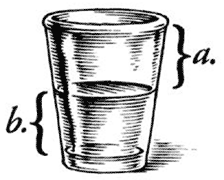
Confederate AWOLs: the glass half empty?

Have been poking around Rebel AWOL anecdotes and am encountering some stories as horrific as the Union's own.

Big rethink in progress.

Joining the ranks of the educated

Milestone today. I finished my application and sent it in to Kings College, University of London. Acceptance into the masters program for War Studies? We'll see. Read about it in one of Mark Grimsley's blogs.

Bloggers: educating one reader at a time.

7/06/2006

From Kornblith to Winik and back again

Here's an interesting short essay on the uses of history by Gary Kornblith.

Faced with the job of class stimulation, Prof. K challenges his youths to identify the end point of the Civil War, a challenge near and dear to my own heart. He then draws an analogy between Appomattox and the announcement from the deck of the Lincoln, "Mission Accomplished."

But I think we have apples and oranges here. To say "Mission Accomplished" in that specific context requires aggressive political betting while to say "Appomattox  = end of war," requires an historiographical analysis that snubs the record. When the surrender of Lee is elevated by false historiography to the equivalent of a Union "Mission Accomplished" it passes out of history and into a realm of politics as pure as that of a re-electable president announcing military victory in time for another national mandate. 

The Appomattox idea is absurd on every level. Viewed from the deck of the Lincoln: all armies smashed, government toppled, joyful populace, time to declare victory and hope it sticks. View from Appomattox Court House: enemy government intact, enemy armies fighting (and winning) set piece battles, hostile local population all about, uh oh.

I'm sorry Kornblith turned this line of inquiry into a class lesson in his own retail Democratic politics, but then professional historians have an astonishing affinity for non-historical expression. The next logical step in his presentation was to tackle the question "How do wars end?"  He should have taken that one example at a time. The South not becoming Iraq has been a huge moneymaker for author Jay Winik (April, 1865). I'm sure it could have been a classroom pleaser as well.

7/04/2006

The Centennial lives on

Mea culpa. Andy's gentle chiding reminds me to make distinctions.

Good people doing good work have been inspired by dogmatic Centennial literature. Without that inspiration, we might not have this new work. Certainly Gerald Prokopowicz is one of those and I intend to talk about his book soon. It is fundamentally non-Centennialist in its methods, by the way, fundamentally non-literary, fundamentally analytic.

In one way, at least, Gerald remains true to his Centennial inspiration - in trying to develop public history as a discipline, in looking for ways outside of publishing that can bring history to the broad masses, an enterprise dear to Nevins and McPherson but which they confined to book writing. Can public history be done without resorting to a "party line"? Nevins and McPherson's careers shout "no" but Gerald seems to be finding a different way, an open way sensitive to and interested in contrary views and new thinking.

On the radio, Professor P. is the antithesis of the Centennial historian. He is open, engaging, Socratic, and capable of broad discussion of uncongenial opinions. For the flip side of this coin, read the notes provided by Allan Nevins to Charles Wainwright's A Diary of Battle where every comment the diarist makes that does not pass American Heritage's editorial policy tests is corrected via footnotes.

Corrected, not challenged. And yet, we would not have Diary if not for Nevins.

So Andy has a good point if he invokes Gerald Prokopowicz as an example of Centennial inpiration followed by positive transformation. There are other examples, too. An enormous number of people have been inspired by Bruce Catton, for instance, without buying into the Nevins-Catton dogmas.

Recently I picked up a copy of Burton's Extraordinary Circumstances and read the acknowledgements . It was an honor roll of Centennial authors: the snide, the dogmatic, the obtuse, the suppressors of sources, the avoiders of contradiction, the authors of career killing book reviews. To store staff, I must have looked like I was having an asthma attack. And yet leafing through the book, I found Burton himself straining to be fair, openminded, and clearheaded. Bravo - I'm going to enjoy reading this.

So, to have been inspired by Centennialists is not necessarily to be a Centennialist, to follow their doctrines, nor to have acquired their dark penchant for control of the discussion.

Andy brings up the name of Gary Gallagher in connection with Gerald Prokopowicz's. This is a little confusing. If Gallagher is intended to represent the continuation of American Heritage thoughts and writings into the present day, good - point taken. But if he is supposed to represent Centennial inspiration followed by new directions in research and publishing
I would like to disagree and ask that his name not be linked to Prokopowicz's in any career typologies.

Let me further raise here the possibility (I could be wrong) that in Gallagher's management of his editorial duties at UNC Press and in his assembly of various anthologies we can discern shadows of partisanship, for it is very difficult to find in these publications views contrary to Gallagher's or to that of the 1960-1965 status quo. (There is the exception of Brooks Simpson's essay in Gallagher's second Antietam collection, but that is "too late, too little.")

If you are anthologizing articles on the Maryland Campaign, for instance, and you are excluding work by Harsh, Clemens, Reese, and others, you have created a doctrinal artifact on the first try. On your second try, you have issued a very public, very flamboyant statement. Not a scholarly one, either.

Obviously, I object to the Centennialists relying on literary technique to solve historical questions; I despise their selective use of sources; I don't appreciate being told how to think about Civil War controversies; I cringe at the incessant invitations to emotionally identify with historical figures; and I don't appreciate cheap, wise-guy comments about generals or politicians in my historical reading.

Having said that, please understand that I have no quarrel with anyone's enjoyment of any Civil War literature - this blog is a record of my own dislikes and likes strongly stated, even overstated. Further, liking this or that author does not prevent anyone from doing good work or honoring my own values of research, curiosity, and flexibility.

The very "spirit of the times" demands openess and inquiry so as to doom rigid, unchanging doctrines. A literary and historical milieu like than engineered by Allan Nevins then is impossible today. ACW publishing is breaking wide open and (paradoxically) much of the change is coming from people inspired by American Heritage and its stable of Civil War writers.

More power to the new thinkers inspired by Centennial work ... and grudging thanks to those who inspired them.

The South's Civil War

We're all familiar with Mississippi's Free State of Jones, but I had not previously heard of Florida's Independent Union Rangers.

7/03/2006

Confederate AWOLs: the glass is half full

The idea that the AOP enjoyed more coherence and less straggling or desertion than the ANV is widespread but counterintuitive. Saving the matter of numbers for a later post, let's first apply some general observations and reasoning.

Management of the AWOL problem - Here's a question; notice your "gut instinct" in answering it.

Which Civil War side's high field command, Union or Rebel, best matches the statements below:

* Mindful of the AWOL problem, distressed by it, harshly suppresses it.
* Inattentative to the AWOL problem, blase about it, soft on punishment.

On the one hand, we have the Jackson/Lee record of dealing with stragglers, worrying about the phenomenon, safeguarding evry march against straggling, even executing laggards. On the other hand we have Marsena Patrick collecting dawdlers roadside and returning them to their units.

The seriousness with which the ANV regarded straggling could have come in whole or part from worries about Union numbers; the anti-straggling, anti-deserter harshness might have exacerbated the problem; or, the commanders might have been making a mountain out of a molehill. The attitude itself does not point to higher or lower straggling, but to a commitment to fight it through the most desperate measures, including firing squads or hanging.

We should note that the Rebel commanders' actions were aimed at the reduction or elimination of the problem. There is not public Union equivalent to the record left by Lee on this, nor to the actions of Jackson on the march. Union commanders made fewer efforts, milder efforts to correct their problems. My bias is towards assuming less control of the phenomenon on the Union side and therefore more problems.

Content of anecdotes - In surveying the anecdotes about stragglers and deserters, one is struck by how out-of-scale Union stories are. In researching this post, I noticed Joe Harsh gave one example to support his claim of higher ANV straggling rates. IIRC, a small party of three or four rebels announced to their company that they were going to the rear to brew coffee or cook rations as a battle was pending. At the end of the day (and fighting) they rejoined their unit.

Meanwhile, on the Union side, Wainwright tells of a march in which he sees "thousands, literally acres of them [stragglers], cooking their coffee or sleeping around their fires."

Consider the the hundreds of stragglers who seized a medical evacuation ship sent to the Peninsula, the Daniel Webster; the chief sugreon then counted another 1,200 stragglers who had been skulking in the hospital who failed to make their getaway! This at a time when the surgeons counted an AOP present-for-duty strength of 78.000.

Structural bias - One kind of anecdote on the Rebel side that I should mention is that of various Southern localities developing armed bands in the bush, some of which waged war against local authorities. That speaks of a high desertion rate. However, in reading The Free State of Jones, one notices that the manpower in these bands also consists of Unionists, outlaws, and escaped slaves - not just deserters.

The South's ad hoc desertion - whatever its rate - had a structural equivalent on the Union side that is not widely understood.

Union soldiers wrangled "gray market" furloughs from company grade officers. McClellan or Hooker might have a ban on leave or a requirement leave be given by regimental commander or higher, but company officers could stand on state authority (however they interpreted it) and give furloughs at will. Equipped with these dubious passes, soldiers had only to finagle their way past those few checkpoints answering to a McClellan or Hooker and they were "home free" with "legal" authorization and full documentation. Moreover, these getaway artists remained on the roster to show up on the payroll musters monthly thus bamboozling muster-loving pop historians as well as their own high commands.

As we have seen, Lincoln attributed the AOP's low participation rate mainly to these furloughs and it would be interesting to try to estimate the dimensions of the problem. Surely, Hooker's rebuilding of the strength of the Army after Burnside owed much to recalling soldiers who had gone home on company passes.

In sum, the Union had a vehicle that facilitated absent with leave claims for many who were in fact AWOL. On the Southern side, there is nothing like this and army-level leave policies (like McClellan's) seem to have been strictly enforced below Lee's level.

In light of just these three considerations, I have great difficulty accepting ANV AWOL as being higher than that of the AOP.