10/31/2005

Craziest McClellan replacement idea - your input

Reading about Napoleon B. Buford in these pages, reader Bob Fugate asked for a rundown of McClellan replacements considered during GBM's tenure as G-i-C and AoP commander.
 
I have my list and am checking it twice. Meanwhile, please send your own ideas and suggestions. Win a prize for the craziest McClellan replacement idea that I never heard of put to the Administration or considered within it.
 
We're having a contest, would you believe it.
More delays - back tonight. Thanks for visiting.

10/27/2005

A brief message from the AAAARGH! department

Have been posting through my cell phone since March. Painful, painful.

Phone company finally ran lines out to my corner of suburbia - time elapsed, six months from request. Immediately activated an AOL account to take advantage of the mighty 56k bandwidth capability. Hooray.

USB (cell phone connector) gets along with modem port. Nice.

Time for change after one week; everything is too peaceful. Yours truly adds home wireleness network and wireless device addressed to USB where cell used to connect.

Crash burn reboot. Repeat.

It's fixed now and I'll start posting regularly Saturday.

Whew.

10/25/2005

Goodwin starts book tour

Author Richard F. Miller mentioned to me that Doris K. Goodwin was having union boycott troubles; a quick news search uncovered a Goodwin news mini-jackpot. Partake with me:

The Boston Globe’s Alex Beam marvels at her "return to polite society" and fantasizes about an interviewer asking her "So, Doris, tell me -- how much of this did you write yourself?" That would certainly be my first question.

In another piece, Beam notes that the striking Aircraft Mechanics Fraternal Association (AMFA) has targeted Northwest Airline director D.K. Goodwin for pressure. (Goodwin supervising airline management reminds me of the cliche "That's no way to run an airline.")
Rogers [an outside PR specialist hired by the union] says he has printed 100,000 copies of a leaflet titled "The Great Emancipator Meets a Great Prevaricator," which revisits embarrassing episodes of alleged copying that bedeviled Goodwin in 2002. Keith Anderson, the head of AMFA's Boston-based Local 2, says the union's 80 local members will hand out leaflets in Concord, where Goodwin lives, at the airport, and at Goodwin's promotional events. In a letter, AMFA national director O.V. Delle-Femine has informed Goodwin that "we intend to notify a great many interested parties . . . that you are unfit to serve on the Northwest board and should resign immediately."
I wish I had a way to donate to that worthy cause.

You may need an air sickness bag for the next bit, sorry to say.
... in the book-lined living room of her 150-year-old renovated farmhouse in the suburbs of Boston, Goodwin uses just that word to describe the 16th president. Sexy.
Have you ever wondered how far you yourself would go to promote a book? Would you go that far?

10/24/2005

Lost continents of understanding - part 1

When James McPherson's Gettysburg anniversary tour guide came out - he is in fact a private Gettysburg tour guide - a number of reviewers were surprised at his fit of pique about mythbusting:
It is obvious from his treatment of these subjects that McPherson strongly dislikes the idea that these myths (which he apparently has repeated on his tours) are now being challenged by more recent research.
The case for shoes at Gettysburg being a myth has been nicely covered by author and Gettysburg specialist Tom Desjardin in this interview on Civil War Talk Radio. Here are McPherson's own comments on the matter:
Generations of historians--and battlefield guides--have said that the advance brigade of Heth's division was heading to Gettysburg to find a rumored supply of shoes in town. Young people especially are captivated by the story that the battle of Gettysburg started because of shoes. Recently, however, some historians have debunked this anecdote as a myth. There was no shoe factory or warehouse in Gettysburg, they point out; the twenty-two shoemakers listed in the 1860 census as living in Gettysburg were barely sufficient to make or repair the footwear worn by county residents. And if there had been a surplus of shoes in town, they would have been cleaned out by Brigadier General John Gordon's brigade of Major General Jubal Early's division when they came through Gettysburg five days earlier.

The shoe story, claim these historians, was concocted by General Heth (pronounced Heath) to explain why he blundered into a firefight contrary to Lee's orders not to bring on a battle until the army was concentrated. Heth said that he thought the Union pickets he encountered on the Chambersburg Pike were merely local militia who could be brushed aside, so he kept going to "get those shoes."

The revisionists have made one good point: there were no shoes in Gettysburg except those worn by the inhabitants still in town (many had fled). But that does not necessarily discredit the shoe story. The Confederates may well have thought there were shoes; several of them later said so. In any case, the anecdote serves an important purpose in that it illustrates that the battle of Gettysburg began as a "meeting engagement," or "encounter engagement." Neither commander intended to fight at Gettysburg; the battle built up step by step from that first encounter on the Chambersburg Pike. Let us concede that the shoe story can neither be proved nor disproved; let us follow the current fashion and call Heth's advance a "reconnaissance in force" to probe toward the enemy; the end result was the same.
If you listen to Desjardin's summary of the shoe story revision, it does not match McPherson's recap. Desjardin says that the only source for any shoe theory is the one remark made by Heth and that the remark is quoted out of context; that the "revisionists" (researchers?) have searched for evidence of Rebel comments about shoes or beliefs about shoes and drilled only dry holes. He says that a certain pop historian took on an out-of-context Heth quote and in the retelling among pop historians using that secondary source, the tale ballooned.

So, on the one hand, McPherson has appeared to trim the revisionists case down to a size where he can declare "draw."

On the other hand, his underlying point is terifically important: "The Confederates may well have thought there were shoes..." Ah, belief is being given a little credence here. Odd for McPherson, but welcome.

Modern Civil War historians, led by McPherson himself, have gone to extroadinary lengths to suppress from the record what the actors believed. If what they believed was not true; why include it? If true, then put it in! That seems to be the rule and it presents a wickedly distorted picture of the Civil War by drowing context and motivation.

Beliefs, misinformation, these are the lost continents of Civil War history.

A Centennial historian, an avid defender of that doctrine, once cautioned me against reading Civil War newspapers. Filled with misinformation, he said, as if this were a revelation. At the same time, this fellow knew and fully credited the notion that Robert E. Lee's best intelligence came from Northern newspapers.

We see the same selective or dual consciousness in McPherson's misguided attack on shoe revisionism. For in the shoe revisionism, at least as summarized by Desjardin, we see exactly the correct way in which to explore a lost continent:

They searched, not only for the shoes, and then the absence of shoes, they searched for a belief in shoes. And when all three searches failed, then and only then did they proclaim the shoe story a myth.

More lost continents tomorrow.
NEWS | The news is on hiatus today

10/21/2005

Talking points

Had a nice time on Civil War Talk Radio today. Will post a line when the recording becomes available in the archive.

Preparing for the show, I jotted down some talking points in three categories: McClellan, public history, and the effects of the Internet on publishing. The show was conversational, however, and the points were not needed so I present them here as souvenirs of a moment passed. For what it’s worth:

George B. McClellan

+ In the general consensus about the war and its personalities, Grant and McClellan have become archetypes or stereotypes.

+ In this framework, the Grant story represents a fantasy outside of anyone’s experience while McClellan’s experience is part and parcel of our daily lives.

+ Grant: the hard-working apolitical subordinate works for the rational and wise boss who rewards his subordinates based on merit. His worth being recognized strictly through personal effort, Grant is given all resources needed to do his job, plus unstinting personal and moral support and, as he brings the organization success after success, he is showered with popular accolades.

+ McClellan: under-resourced and underappreciated, McClellan is coping with a distant, distracted superior who keeps inserting layers of incompetent micromanagers between them. McC has constraints that cannot be remedied, timetables that are unrealistic, scheming, incompetent subordinates, jealous peers, and an endless supply of supernumerary experts eager to tell him publicly how to do the job better. Try as he might, he is maligned, discredited and complained about.

+ We don’t know anyone like the Grant character; have never heard of such a person; don’t know anyone who knows of such a person; we will die without ever even hearing of a work life like this one. On the other hand we and everyone we know faces a McClellanistic existence every day, all day almost from birth.

+ Somehow the Grant fantasy – which no one can relate to - is more popular than the McClellan reality – which everyone can relate to.

+ McClellan revision currently has four aspects.

Rowland: corrects historians’ excesses.
Rafuse: filters the man’s actions through his political ethos.
Beatie: places the man in a total military context.
Harsh: places the man in specific situational contexts

+ The next breakthrough will come from pop history.

+ McClellan is surrounded by a rich body of unmined personal interest material including many fine unpublished anecdotes. This material is made to order for pop history.

+ McClellan’s family setting is Tolstoyan: he is the poor son of Philadelphia gentry seeking his place in the world while his wife’s family is in rapid decline from former grandeur (the “Albany Regency”). Meanwhile his entire family is embroiled in the war, North and South, and their individual fates hinge not on their own efforts but on the general's destiny.

+ A new pop history that uses all the McClellan materials, especially the anecdotes and family histories, will materially change how this reputation plays.

Blogging

* The Web has absorbed older Internt media: Archie, Gopher, Listserv, and Usenet. But the common technical denominator remains hypertext.

* Links are references and blog writing around the link is in the style of an end note or footnote. Blogs are essentially footnotes and endnotes organized around references (links).

* Blogs have the same reading appeal as footnotes, offering serendipity, random information, surprise and delight. This may find its way back into commercial publishing, which is hostile to notes.

* The echo effect of comment and response among blogs of the same topic represents something like a roundtable discussion but is deeper – responses are more thoughtful and referenced. This can accumulate into a creative collaborative effect.

* Using hypertext, an argument can be constructed of scarcely connected links. “Proof” can be made out of artfully managed hypertext.

* As McLuhan would say, the medium is trying us on and we fit.

Public history

# The preservation movement has hardened into a shape where there is an overwhelming sector leader with a hard-and-fast preservation ideology.

# People who contribute to preservation groups do not understand that they are endorsing very specific philosophies: of land management; of public access; of ranking merit or worth; of responsibility and maintenance.

# Local history is moving online and becoming visible. History clubs are going digital.

# Meanwhile local history is subject to pressures of heritage tourism.

# Heritage tourism develops a story that will sell to budget appropriators. This story then seeps into official accounts of events.

# Heritage tourism looks to commercial media (publishing, film, TV) for validation of its money-winning messages.

# Sophisticated readers constitute a reserve of healthy skepticism towards public history projects.

Friday notes

Kremlinology department: In the Round Robin bar in Willard's, the framed picture of Abraham Lincoln hangs below that of Charles Dickens. And the picture of Robert Taft hangs higher. Make of that what you will.

Reminder: I'll be on Civil War (Internet) Radio at noon (EST). If you miss it, the show may be archived for later listening and I'll blog some impressions later in the day.
Edward L. Ayers | While vestiges of older [ACW] interpretation still crop up in people's vague recollections, no one has stepped forward in a very long time to offer a popularly accepted counterargument to the explanation codified in Burns and McPherson.

10/20/2005

Team of Rivals details released

Flyers are circulating announcing Doris Kearns Goodwin's appearances promoting her first post-scandal work, Team of Rivals. Author Richard Miller has been good enough to send me a few paragraphs from one that he encountered; very interesting stuff it is and I am grateful.

The flyer text outlines a premise that is remarkably story-driven, even by pop history standards. I have emphasized bits that jumped out at me but otherwise offer the material verbatim and without commet:
In this highly original work, Ms. Goodwin illuminates Lincoln's political genius as he rises from the obscurity of a one-term congressman/prairie lawyer to become president and prevail over three gifted rivals with national reputations.

Throughout the turbulent 1850s, Goodwin demonstrates that Lincoln's success was the result of a character that had been forged by life experiences that raised him above his more privileged and accomplished rivals. He won because he possessed an extraordinary ability to put himself in the place of other men, to experience what they were feeling and to understand their motives and desires.

It was this capacity that enabled Lincoln, as president, to bring his disgruntled opponents together, create the most unusual cabinet in presidential history, and marshal their talents to the task of preserving the Union and winning the war.

We view the long, horrifying struggle from the vantage point of the White House, as Lincoln copes with incompetent generals, hostile congressmen, and his raucous cabinet. He overcomes the obstacles by winning the respect of his former competitors, and in the case of Seward, finds a loyal and crucial friend to see him through the struggle that was the Civil War.

A drink with the ghosts

If you're in the neighborhood, stop by Willard's tonight at 7:00 p.m. and have me paged at the bar.

I'm meeting relatives for dinner elsewhere, but there should be time for a toast with whatever ghosts can be scared up.
Edward L. Ayers The current [ACW] interpretation contains these tensions in an overarching story of emergent freedom and reconciliation. While acknowledging the complicated decisions people faced, Burns and McPherson resolve these through narrative.

10/19/2005

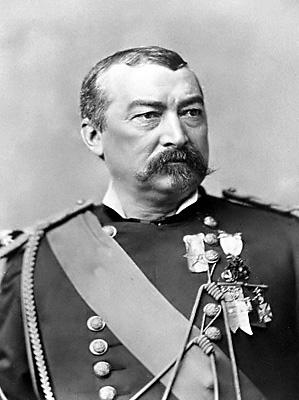
Eric Wittenberg's Little Phil, part 3

Little Phil has the best chapter titles and subtitles I’ve seen since J.G. Randall’s Lincoln biography: “Sheridan’s Disobedience to Orders,” “Sheridan’s Mendacity,” “A Victorious Campaign Bereft of Decision,” “Little Phil’s Cavalier Destruction of Lives and Careers.”

Eric Wittenberg is here dealing his cards face up on the table. No bluffing, no innuendo. Like the old Army training nostrum, he tells you what he is going to tell you, then he tells you what he wants you to know, after which he tells you what he told you. In this case,
Sheridan was not a great commander of cavalry.

Sheridan’s performance in the Shenandoah Valley was laxckluster.

Sheridan had a wide streak of insubordination and was not dependable in a subordinate role.

Sheridan tended to prevaricate…

[Those] who drew his ire [were ruined]
The worst restaurant has the longest menu, as experience teaches - but this is a very manageable kitchen.

Wittenberg is forthright and clear in sticking to this list and I would say he is also economical in making his points prior to appealing to your judgment. Gordon Rhea calls this an “unflinching assessment” and it is somewhat cold where we expect a little authorial bonding with a subject.

But then, Little Phil is not a biography, it is a monograph attempting to correct a record of near universal acclaim: “… he does not deserve the lofty reputation bestowed upon him …”

Does Sheridan hold enough ACW mindshare to be worth this? Can an extended negative demonstration win readers over to a major reassessment? Why write a debunking monograph?

Here’s an answer for you.

When whatever best-selling hack readies his anniversary edition illustrated deluxe leatherette re-issued account of the Third Battle of Winchester, he will have to contend with the arguments raised in Little Phil or look the total fool.

It takes a reputation as big as James McPherson’s to escape the law of self-revision and material self-correction and there is only one James McPherson. The lesser fry cannot get away with McPherson-like avoidance of bad news and contrary views.

Eric Wittenberg has demanded his explanations in a volume widely distributed by a major military publisher, Brasseys, and for the foreseeable future, he will get his explanations or at least an excuse or two, each time someone writes anew about Phil Sheridan.

In that way, his dialog with public history will work for all of us – and that seems eminently worthwhile to me.

Volume III of Army of the Potomac

... where is it? On his website, Beatie said "check back in Jan. 2005 for a publication date. Color me worried. His publisher makes no mention of it on the Da Capo site.

If it's any consolation, you can read an extensive multipart account of Rafuse's McClellan's War on Brett Schulte's blog.

(I returned to Rafuse last weekend for a few score pages and was again overwhelmed with how dense it is, factually, the Civil War equivalent of a Scottish (traditional fruit) wedding cake.)

[Postscript 4:40 p.m. A friendly reader informs me that Volume III is surely coming out but that there is a level of authorial dissatisfaction with Da Capo that raises the possibility of alternate publishing arrangements delaying the release of this title.]
Edward L. Ayers | McPherson is so vigilant [in protecting his conclusions] because he recognizes that this interpretation [that he champions] has become established only after a long struggle. The elegance and directness with which he and Burns tell their stories can lead us to forget what a complicated event the Civil War was.

10/18/2005

Eric Wittenberg's Little Phil, part 2

Eric started into this Sheridan revision the way I started into my McClellan rethink (if I read his introduction correctly): reading, one encounters a consensus; it is monolithic and inescapable. At the same time, researching other matters constantly uncovers more material detrimental to the consensus.

A point is reached where the consensus is untenable, where one feels obliged to stand up and say to the many Pulitzer bearers, either stop your nonsense or deal with the contrary evidence. In other words, sit up straight and act like an historian, dammit.

This is where we join Wittenberg in Little Phil. He is laying out the anecdotes and incidents that make accolades of “great general” or “great cavalry commander” impossible. He is stating the total case against Sheridan because no one has dealt with the unpleasant material as a single body of evidence, no one is seeing a complete picture of limitations and shortcomings. He is demanding that the consensus mongers put up or shut up.

The danger in this approach is that if forcefully delivered it appears to be replacing one form of absolutism with another. I see from some Amazon reviews of the book that some readers have mistaken it for yet another “my way or the highway” ACW offering in a long series of obnoxiously “definitive” doctrines. If this were happening, Wittenberg’s presentation would still have merit because it replaces conclusions flowing from storytelling with conclusions based on analysis. It would be a higher form of "my way." But the complaint (that this revision offers a new absolutism) will not hold because however forcefully delivered, Wittenberg repeatedly challenges readers to contest his presentation. At one point he even says that he looks forward to hearing from dissenters, that he looks forward to engaging in a public debate.

This is a crucial distinction between Little Phil and its predecessors. The attitude, “show me how I am wrong” opens the possibility of correcting the pendulum’s swing, if it has gone too far. Of restoring any evidence not given its full due. Wittenberg is attempting to enter into a dialog with “public history.”

Although this is the best format for presenting a corrective – analysis in the form of legal case – it does have limits. First, the story lover is not used to analysis and inviting him to weigh evidence in your case may not produce quite the verdict you are looking for.

Secondly, there is the important issue of context. On me and my McClellan projects, this need has cast a deep pall of gloom. A revision of the McClellan legend requires, I think, a wholesale replacement of the context in which he is viewed. When friends ask me to merely retell Centennial history with an upgraded role for the McClellan character, I balk.

Eric Wittenberg does have it easier in this respect than I do; I think he can revise the Sheridan legend without bringing down the whole temple of conventional Civil War history. Such a limited revision, however, thrusts upon him specific questions of “how” and “why” here and there. What did Grant see in this man? Why do historical writers love him so?

Wittenberg’s management of these kinds of issues is done courtroom style: he focuses on his points, he does not expand the scope of the trial, he does not seek speculative answers to hypothetical objections. Here is what Sheridan said and here is what he did and here is what the record reports. Let the evidence tell the story.

This calls attention to the evidence and the fair handling of evidence. I trust Eric Witttenberg and believe that he has handled the Sheridan material fairly. The difficulty in Little Phil, however, is that it solicits confidence in a less-well-known author from a star-struck general readership jaded by the corrupt evidence handling of storytellers, conditioned by stereotyped history, and trained to enjoy the spectacle of incompetent researchers sewing shiny fragments into bright lying tapestries.

Eric Wittenberg is attempting to operate rationally in the irrational world of Civil War history. God bless him.

He is measuredly speaking to a wrought-up crowd whose non-historical approach to history reading has been blessed and blessed again by heavily credentialed "official" historians. Thus, while General Sheridan’s reputation presents this freakish figure perceived through a funhouse mirror, the question stands: will the carney's patrons pay money to visit a room full of normal mirrors?

After all, is this not about entertainment?

(Enough historiography, on to the gist of the book tomorrow.)
Edward L. Ayers | [Robert Penn} Warren, like [Edmund] Wilson, did not shun dramatic effect. It was tempting, he argued, for Americans to regard the war as "part of our divinely instituted success story," and to think, in some shadowy corner of the mind, of the dead at Gettysburg as a really small price to pay for the development of a really satisfactory and cheap compact car with decent pick-up and road-handling capability.

10/17/2005

Eric Wittenberg's Little Phil, part 1

How do you assess a reputation?

Carefully, very carefully. As to what "carefully" means, the choices seem to be:

Analytically. This is a strong card to play in the "did it happen" round but less useful in vaguer appreciations such as of goodness, intentions, and capability. In Little Phil, Eric Wittenberg has written an analytic study of Sheridan’s, his model of analysis being the legal brief.

Narratively. This involves telling or retelling a tale to establish or revise a reputation. Narrative slights evidence to a greater or lesser extent. Jim Ridgway has written a narrative revisiting McClellan’s military performance in a retelling; Ethan Rafuse has retold the McClellan story through the filter of deeply-held Whiggish political beliefs.

Comparatively. This involves telling parallel stories or making comparative analysis. Tom Rowland attempted to revisit McClellan’s reputation by comparing historians’treatments of Grant and Sherman on one hand and McClellan on the other.

I mention McClellan books here because the reassessment of McClellan upwards and of Sheridan downwards are sides of the same coin, operationally; and as founder of the McClellan Society, I have given a lot of thought to the how-to in this.

Eric Wittenberg's approach represents my own best choice for a debunking effort: analytic. I early on rejected the comparative and narrative approaches. Furthermore, I have also tended towards the lawyerly handling of debunking evidence (as can be seen in some seven-year-old posts here and here).

But I never gained the confidence to try the analytic approach in a book-length revisit of the current McClellan legend. I had decided it couldn't be done; too many worries about context and loose ends and nailing the details. My opinion on this was hard and fast.

The trouble facing me in reading Little Phil, then, was that if the author succeeded in what he was trying to do, I would be proven wrong and have to revisit a large, dormant project. His success and my reading enjoyment would cause me a major (painful) rethink.

Constantly asking others to rethink - as I do - doesn't mean I wish that hardship on myself. Thus I started a read biased against the book.

[More tomorrow...]

Civil War Bookshelf and you on the radio

Listen for me on Civil War Talk Radio this Friday (12 noon EST) when host Gerald Prokopowicz (right) and I will discuss McClellan, public history, and the Internet.

This is in talk show format and any denunciation and berating of the guest (me) will make for good radio. That’s what we should be aiming for, I think. Look here for the toll-free number but note: if you call too early or too late you’ll be reaching an entirely different show.